Revisions to Car (United Kingdom) November 1962 (Volume 1 No. 3)


Added issue volume:
1
Added description:
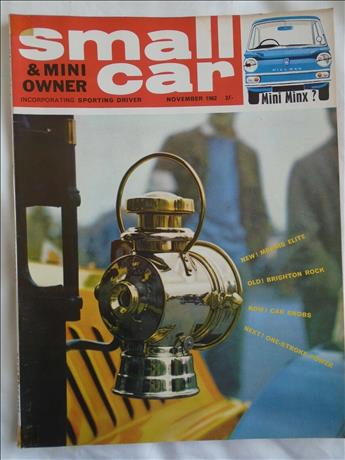
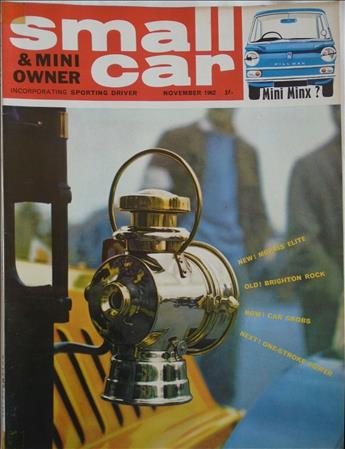
Cover
Brass was the hallmark of the Victorian car, so we let it shine on the cover. 40-43.
Added contents:
This month we pay tribute to the men who started this motoring business with special features on veteran and vintage cars and their intrepid drivers.
What a long way we have come since then. Much as we love the old cars it is something of a shock to re-experience their firm suspension on bad surfaces after being conditioned to the modern soft ride.
Motor manufacturers generally, after some unhappy experiments in the early days, have tended to be very conservative, the British more than most. This conformity to what we might call the Olde English formula, with a pushrod overhead valve engine driving the rear wheels has persisted for 60 years.
But what a revolution there has been in the last three years as other makers race to match the marvels of the BMC baby. Suspension is still the weakest point on most British models, as we found out when trying to keep station on the appalling surfaces of the Routes Nationales.
This arises from the paradox from which we suffer in this country which gives us billiard-table surfaces on roads made for the speed of the horse.
But those who must motor over the dirt tracks of Africa, Australia and elsewhere know that the modern white man's burden is poor suspension and fragility of other parts. Not so many years ago a big British maker told us he couldn't be bothered to build his cars in such a way that a few maniacs misguided enough to live in rough country could move about.
What a change today, with British cars featuring in the East African Safari and the Liége-Sofia. More power to their elbow!
What a long way we have come since then. Much as we love the old cars it is something of a shock to re-experience their firm suspension on bad surfaces after being conditioned to the modern soft ride.
Motor manufacturers generally, after some unhappy experiments in the early days, have tended to be very conservative, the British more than most. This conformity to what we might call the Olde English formula, with a pushrod overhead valve engine driving the rear wheels has persisted for 60 years.
But what a revolution there has been in the last three years as other makers race to match the marvels of the BMC baby. Suspension is still the weakest point on most British models, as we found out when trying to keep station on the appalling surfaces of the Routes Nationales.
This arises from the paradox from which we suffer in this country which gives us billiard-table surfaces on roads made for the speed of the horse.
But those who must motor over the dirt tracks of Africa, Australia and elsewhere know that the modern white man's burden is poor suspension and fragility of other parts. Not so many years ago a big British maker told us he couldn't be bothered to build his cars in such a way that a few maniacs misguided enough to live in rough country could move about.
What a change today, with British cars featuring in the East African Safari and the Liége-Sofia. More power to their elbow!